
Robert Minhinnick is an award-winning poet, essayist, novelist and translator. An environmental campaigner, he co-founded Friends of the Earth (Cymru) and charity Sustainable Wales. He has published seven poetry collections and several volumes of essays. His editorship of Poetry Wales from 1997 until 2008, defined by an edgy, outward-looking philosophy, marks perhaps the most exciting and progressive period of any Welsh periodical. His latest novel, The Limestone Man, is out now from Seren.
The boy and the ape look down at me. Beside them the man in the smock already seems convinced. Or enchanted.
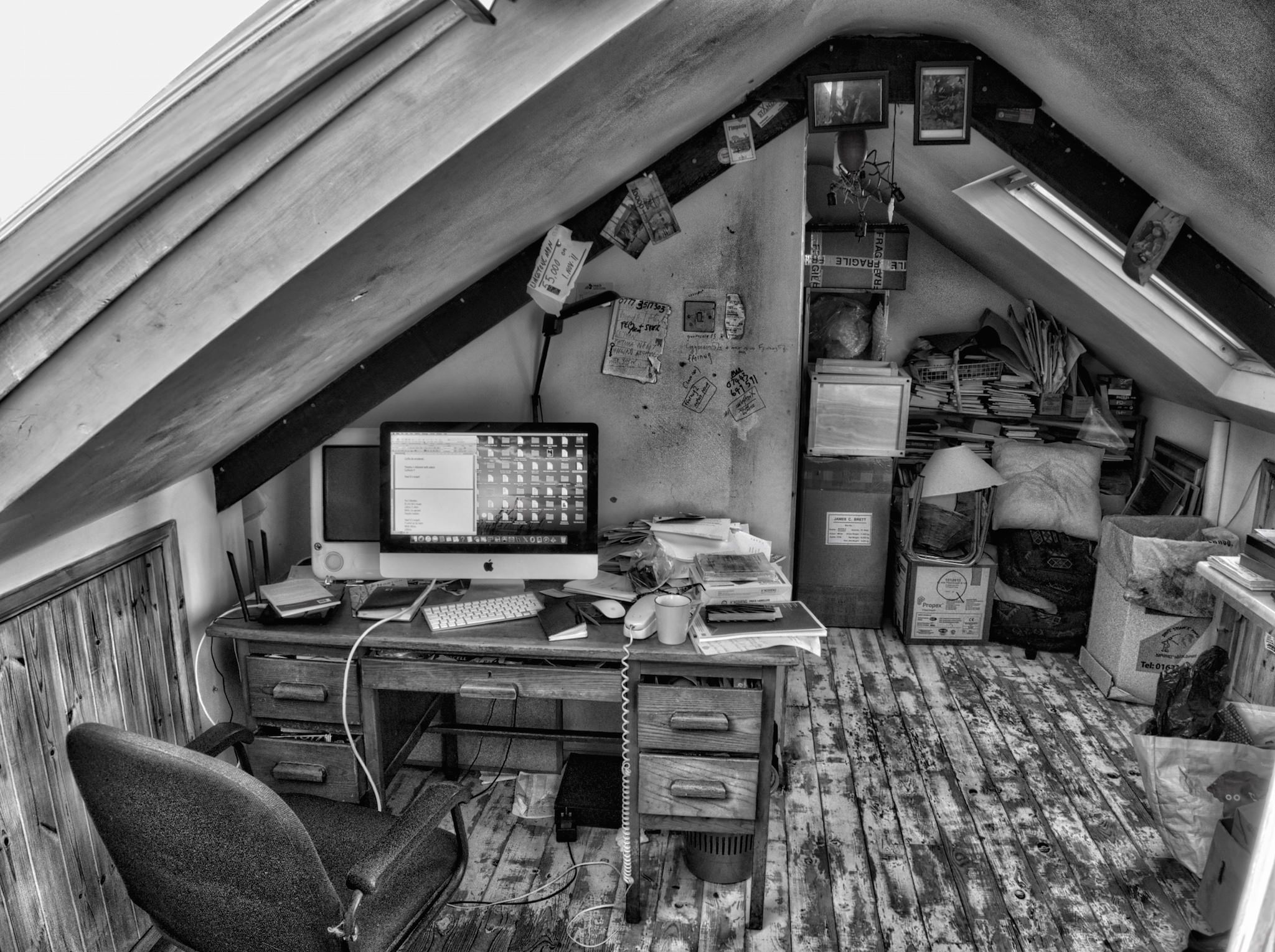
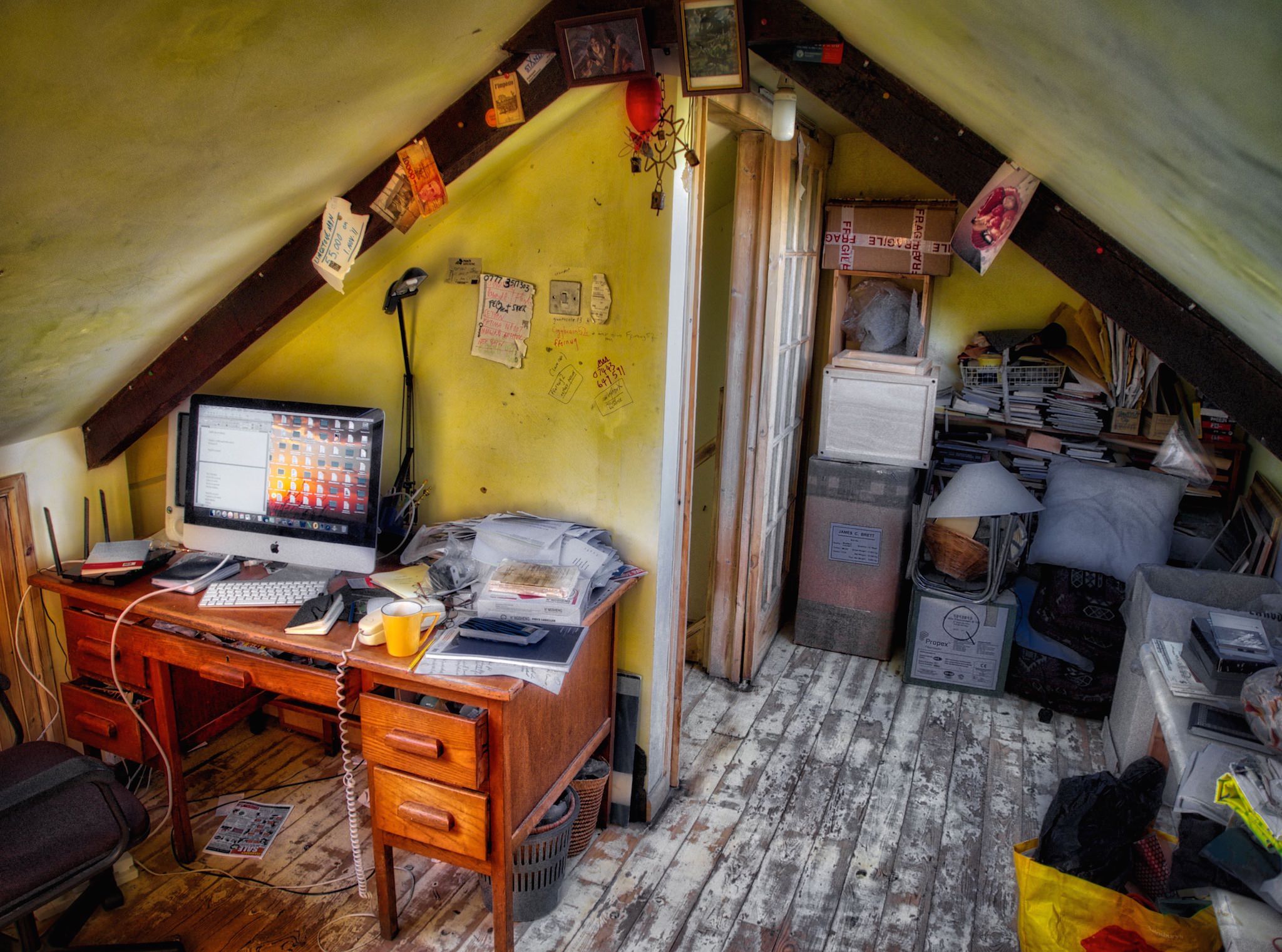
In this attic room a desk. And dust.
The attic room
Paper dust and the dust of human skin, dust from the fossil corals found on Cog y Brain one mile to the east. That summit was once underwater but today is amongst the highest sand dunes in Western Europe. This coral dust and the sulphur-smelling conglomerate limestone I have collected from the same dune litter the desk. A desk dominated by an Apple and its black screen.
Behind that, amongst the shells and the seaglass and the words that might have meant something, is another computer. Derelict yet alive. If I press a switch it will reveal sites like ruined temples. Which gods were worshipped there? What foolishness pursued?
Strange to remember that four people worked in this room, three of them salaried. This used to be the office of Sustainable Wales and some of its documents are still stored here.
On the wall above the screen, further archaeology, passwords and phone numbers in indelible ink. Once these were so familiar I used them without thinking. The worlds they unlocked I took for granted. But those wonders have been supplanted by newer marvels.
Pinned to the rafter above the screen is a postcard of El Greco’s ‘Fabula’. The painting depicts a boy in darkness blowing on a flame between a man and a monkey. I have not thought of this image for years, knowing only that I was arrested years ago by the painting and wanted it close by. ‘Fabula’ remains a puzzling parable for all of us seduced by the modem’s green eyes.
Four feet above the desk is a slate roof. Attached to these slates are thirteen solar panels fitted in late 2015, ‘mono black solarworld’, six at azimuth 270 degrees and seven at 180. German made, these panels sleek as an Audi or the latest Beamer are hard to distinguish. Even if I’m in the gwli behind the house they’re difficult to spot.
The lights are off and there’s daylight from two pivot windows fitted twenty years ago. To the south-west is the deserted fairground, itself a kind of computer screen. On a clear day I might see Exmoor to the south, in the north Stormy Down, where a renewable energy ‘cluster’ is being assembled on what is an old RAF base. Maybe the charity I help administer will film there this winter, on its community energy project, ‘Strike a Light?’
Also on this desk is a leaf from an evergreen oak on Cog y Brain. Rough as a cat’s tongue this leaf, the tree stoical in salt. Books describe it as a typical Mediterranean species, and it was picked this week as a talisman on the shortest day. From that summit the dune slacks lay scattered like silver hubcaps, the emergence at Ffynnon Pwll roaring out of the limestone, its outflow having travelled fifty miles.
In the past I have drank from that water. It allowed the first identifiable people of the area to flourish and I have tried to think about their lives and language, researching them on the black screen’s portal, but also sipping at the spring where it leaves the labyrinth, my knees in the sand where their bones were discovered.
And all the time El Greco’s boy is still blowing on a flame, much to the fascination of the ape and the man who watches.
Originally published by Wales Arts Review February 2016
Photography by Peter Morgan


