The questions in this interview to Kristian are from Robert Minhinnick and Laura Wainwright.
Kristian Evans along with Zoë Brigley have edited “100 Poems to Save the Earth” (Seren) published in July 2021.
Interview: August 2021

1. In the introduction to 100 Poems you describe ‘earth’ as ‘a ground we share not only with fellow humans, but with those who are [in David Abrams’s words] ‘more-than-human’ – rather than the more familiar binary of ‘human’ and ‘non-human’. Can you elaborate on this idea and on how it has influenced or found expression in poetry?
As you say, human and non-human is the more usual phrasing used to describe these things. But non-human often implies a lack: something not quite up to scratch. Non-standard. Not-all-there. Perhaps it also implies a hierarchy: there’s the human, and then there’s all the other unfortunate stuff that is not human. Using ‘more-than-human’ hopefully subverts any prejudice and makes us sit up and ask the question.
It’s also a fact that many creatures perceive things that humans don’t. The world itself is actually more-than-human. There are things ‘out there’ we can’t perceive. It’s easy to forget that we are actually very limited by our senses and our cultural biases. The unknown, the unknowable even, is always there, on the otherside of everything.
The more-than-human also keeps a window open for the possibility of spiritual experience. We often make the mistake in the West of assuming that the spiritual is a question of belief. It can be, I suppose, but it’s also a question of experience, of encounter. Receiving the more-than-human then can also point to those strange states of consciousness that people keep stumbling into, despite our best efforts to ignore them: the sense of the sacred, the mindedness of nature, the fundamental union of all things.
Such experiences are profoundly motivating, but our intellectual culture acts like a deterrent against them. That might have been a necessary historical phase, but it’s now passed. If you have fallen in love with the world, with life, you are more likely to act to defend it.
Poetry has kept its mind open, just about. It’s been the refuge, the sanctuary, of all sorts of endangered thoughts and ideas. Perhaps it’s time for a bit of rewilding.
2. Relatedly, how can this decentring and humbling of human experience – this desire to see earth as more than ‘a mirror where we find only ourselves’ – be realised or negotiated in ‘eco-poetry’ and poetry more generally – particularly lyric poetry? Many poems in the anthology seem to me to grapple with this problem; I keep thinking of Catríona O’Reilly’s line in the anthology: ‘But they mistook the light for their knowledge of the light’.
Catríona’s line gets to the heart of it, yes. Our experience and understanding of the world is always limited by our senses and by our expectations and prejudices. Many creatures see and hear and feel things that are to us invisible, so to speak. People in traditional indigenous cultures, for example, often experience the world very differently to those of us raised and educated in the West.
I often think about a meeting I had many years ago with a Peruvian curandero, a traditional healer from the Amazon region, who I shouldn’t name. He discussed his relationship with ayahuasca, a medicinal forest liana, and his encounters with ancestral spirits and animal spirits, and his ways of interacting with them all through melodies and prayers and symbolic activities. It’s remarkably sophisticated, sensitive, and full of respect for the other (though not without it’s dark side).
We’re starting to realise that we have a great deal to learn from these cultures (and we must do it without stealing from them). In the past they were thought to be crude, primitive, unevolved. We assumed that they had beliefs, and those beliefs were a sort of primitive attempt to explain the world. Superstitions. But now we see those things are not beliefs and superstitions, they are encounters with something. Encounters that are maybe accessible to us too. We thought we were better, smarter, more sophisticated, but maybe we were just missing things, failing to notice, so powerfully focused were we in a different direction. Now we look up and see the world is in crisis, smoke on the horizon – in the last 50 years insects numbers have declined by 75%. We’d better learn to broaden our awareness.
Poetry is the language of the boundary, metaphor the place in-between. All we can do is try to be quiet and attentive enough, and perhaps passive enough, to hear what needs to be said, to hear what is trying to articulate itself in us. The best poems, it seems to me, often have this quality of negotiation, the call of the wild colliding with the other needs and demands of a domesticated human intelligence.
Finally, I would question the use of the term eco-poetry. I know there are prizes and workshops in something called ecopoetry, and I guess a lot of poets use social media to promote themselves, so it can be handy on twitter to reach out to new audiences perhaps. But personally I dislike it. Poetry is poetry. Ecopoetry sounds like a kind of greenwashing for people to hide behind. Ecopoems. Ecopoets. Ecodetergent. Ecodiesel. Am I being harsh? I really dislike it.
3. Would you agree that there is a tension between the stark urgency and escalating momentum of the climate crisis and poetry’s invitation, as you suggest, to ‘slow down and notice what we have been missing’ – to consider the intricacies and significance, as you note in your Introduction for instance, of Blake’s tree, wildflower or grain of sand… Is there a need for poetry now to be more polemical, or more overtly politically engaged? If so, how can poets avoid the familiar criticism of being didactic or ‘preachy’?
I don’t think there’s a tension. Time is relative, and it’s a quality more than its a quantity. Attention is what matters. You can live a whole day staring at your phone, scrolling through twitter and reading the bad news and the day will be gone in a flash. Or you can sit on a beach and attend to the tide coming in and going out and the moon rising, and time will pass far more slowly. One of those days is fulfilling and memorable of course, the other is barely even registered.
As we say in the introduction, “marching in step with political campaigns, diverting poetry’s meander into propaganda’s mill” seems a bad idea. It’s an old discussion, of course, and all poetry is political. But the political poem too easily becomes propaganda if we are overly sure of ourselves. Our poems should be allowed to surprise us, poetry should say not what we would like it to say but what it needs to say; it should pursue its own ends. If we try to force our poems to conform to pre-existing ideas, then we end up with a kind of flatness, a dead water, devoid of life. The mind likes to cage things like poems. It rarely does them any good.
If I was feeling mischievous perhaps I would suggest people throw away their smartphones and go and find a quiet place in the woods, beside a river or on a beach and sit there for 24 hours. See what happens. It will begin to be difficult very quickly, and that will be a sign that you are breaking through the boundary thorns our culture has woven around you. One of the most valuable things, I’m sure, is to have an encounter with what exists beyond that mental boundary.
4. Many poets seem to be addressing environmental issues now. How did you go about selecting the poets or poems for the anthology?
All poets are registering the situation now, even if only indirectly. There is no way to think and engage with the community without your work being in some sort of dialogue with the ecological crisis and the staggering, heart-breaking mass extinction. That became clearer and clearer as we read. There is no ecopoetry, just poetry.
Of course, we both had a few favourite poems in mind, and after a week or two of sharing these and discussing them, we set to work looking for more. Everything went into a pile and Zoё and I had a series of meetings discussing each poem. These took place mostly online due to the lockdowns. We had already been thinking carefully together about ecological and social justice issues and the links between them, so we were in dialogue before we began working on this book. We’d also edited an issue of Magma Poetry Magazine together with Rob Mackenzie on the theme of Dwelling. It’s been an interesting few years for us, engaging deeply with these ideas and issues almost every day. We became so absorbed in the process that we began to dream very similar dreams.
5. The title, ‘100 Poems to Save the Earth’, sounds a hopeful note. Are you optimistic about the future of the planet?
I’m optimistic insofar as I think pretty much anything is possible. I’m with Kelli Russell Agodon’s otter. After all, nobody was ready for the fall of the Berlin Wall, but when it happened it set off a chain reaction that changed the world. Of course, I also take very seriously the possibility that people will remain distracted, billionaires will build bunkers, politicians will continue to lie, and the curtain will fall. But if we act like we’re doomed and sit around sneering at those who are trying to do something, those who are bringing new ideas, then we’re more likely to fail. If we lock everybody indoors and force them to exist vicariously and virtually through the internet, as I’ve heard suggested, we will have failed, we will wither away. We need to green every aspect of our lives, permaculture already holds many of the answers – it will take everybody to get out of their homes and into grassroots community actions, gardens, allotments, rewilding, restoration, decision-making…the resources exist. They’re just unevenly distributed.
These 100 poems are just a small handful of dreams really, a little offering from Zoё and I and Seren and the poets themselves, who graciously agreed to let us share their excellent work. But if we each do what we can do, and choose to live our best life, then anything is possible. Small positive creative actions often have a disproportionately large effect. So let’s step away from the screens and go outside into the wilderness of the real, embrace the world and live.
6. Whose idea was this anthology?
It evolved out of conversations that Zoё and I had been having about the links between ecological justice and social justice. As an academic researcher, Zoë writes about cultural narratives that perpetuate real violence in the world – the unspoken assumptions we receive, at home, in school, from our screens, from books. Harmful narratives about women, black and indigenous people and other traditionally marginalized groups often surreptitiously justify direct or indirect violence against them. We began to notice a parallel with the stories we tell about nature - how our culture justifies its exploitation and destruction. It’s as if there’s something fundamentally at fault with the way we are taught to relate to the world around us.
I’d thought for a while that an anthology of poetry around these ideas might be useful. It might take the pulse of our culture, so to speak, while also focusing attention. When we took the idea to Seren we found that Amy Wack already had something similar in mind. So she gave us the go ahead.
7. The book comes with printed endorsements that include the phrases “achingly beautiful poems” and “beautiful planet”. Was ‘beauty’ your reason for poem selection?
No, but of course we both have some appreciation and understanding of “the beautiful” that partly informs our response to any given poem. There are beautiful poems here, in my view, and others that might challenge us a little.
But what has beauty got to do with ecological awareness? Is it an awareness of our intimate connectedness, our fundamental relationality? An intimation of order? Does it point to some intrinsic value, something beyond the reach of money perhaps? Maybe, but as Rilke points out, beauty can also be the beginning of something unsettling, it calls us out of the customary and habitual, it can frighten, it might even overwhelm us at times.
We can find beauty in everything if we simply pay attention. One of the best toys I gave to my kids was a jeweller’s loupe, they’ve spent hours peering at the tiny spiders hidden in yarrow flowers, the mites nibbling pollen in the buttercup. What a strange world it is through the looking glass. And that’s the key, in my view. Paying attention. It’s quite mysterious, but if we sit quietly, patiently, and attempt to receive the world without prejudice…well, that leads us to the mystics, the visionaries. Maybe that’s what awaits us.
8. The Introduction gives prominence to William Blake. Isn’t the book a spirited reaction against ’these dark satanic mills’?
All art is I hope. What’s the mill but mass production, artificial intelligence, unthinking routine? Quantity over quality. But maybe machines will write poetry one day. None of us are prepared for the implications of combined AI, total surveillance and the “internet of things.” Our online lives are a goldmine, after all, the million clicks, likes, searches tell a rich tale. Is the internet the mill?
Algorithms know our moods before we do. Haven’t done enough exercise today? One day soon an app will tell you, inform the database, and prevent your digital credits being spent on wine or other small luxuries. Your social credit score will reflect how useful you are as a citizen. What activities will be encouraged or discouraged? Perhaps the dark satanic mills are alive and well. The question is, are they getting stronger or more desperate?
Maybe art gives us the opportunity to get free of the realm of human technology.
9. Surely ‘100 Poems…’ is the communal shuddering of one hundred minds when the poets realise that it is not Blake’s protean imagination that has created their world but Thomas Gradgrind’s bean-counting capitalism?
As Mark Fisher reminds us, “it’s easier to imagine the end of the world than it is to imagine the end of capitalism.” Everything is imagination. Failure of imagination is herding us into the Blakean mills, the mental prisons we choose to believe are real. We’ve limited ourselves and our sense of what is possible enormously. Perhaps capitalism’s greatest trick has been to make us believe that all this is inevitable.
But of course it’s not inevitable. Another world is possible. Every poem here is looking for it, every poem here is a glimpse of it.
The thing is, most of us are fatally distracted. The crisis is happening inside us all right now, in our lack of attention, in our mindless consumption, in our endless doom-scrolling.
What if we switch off the screens, unplug the internet, step outside for a while and pay attention to the world? What then? Just pay attention, receive what’s there. Can we even do that anymore? That’s the first step. And if we take it, we might find that we are walking away, we might find that other people are walking away too. Maybe there will be quite a few of us, maybe many of us. That’s my hope.
Kristian Evans
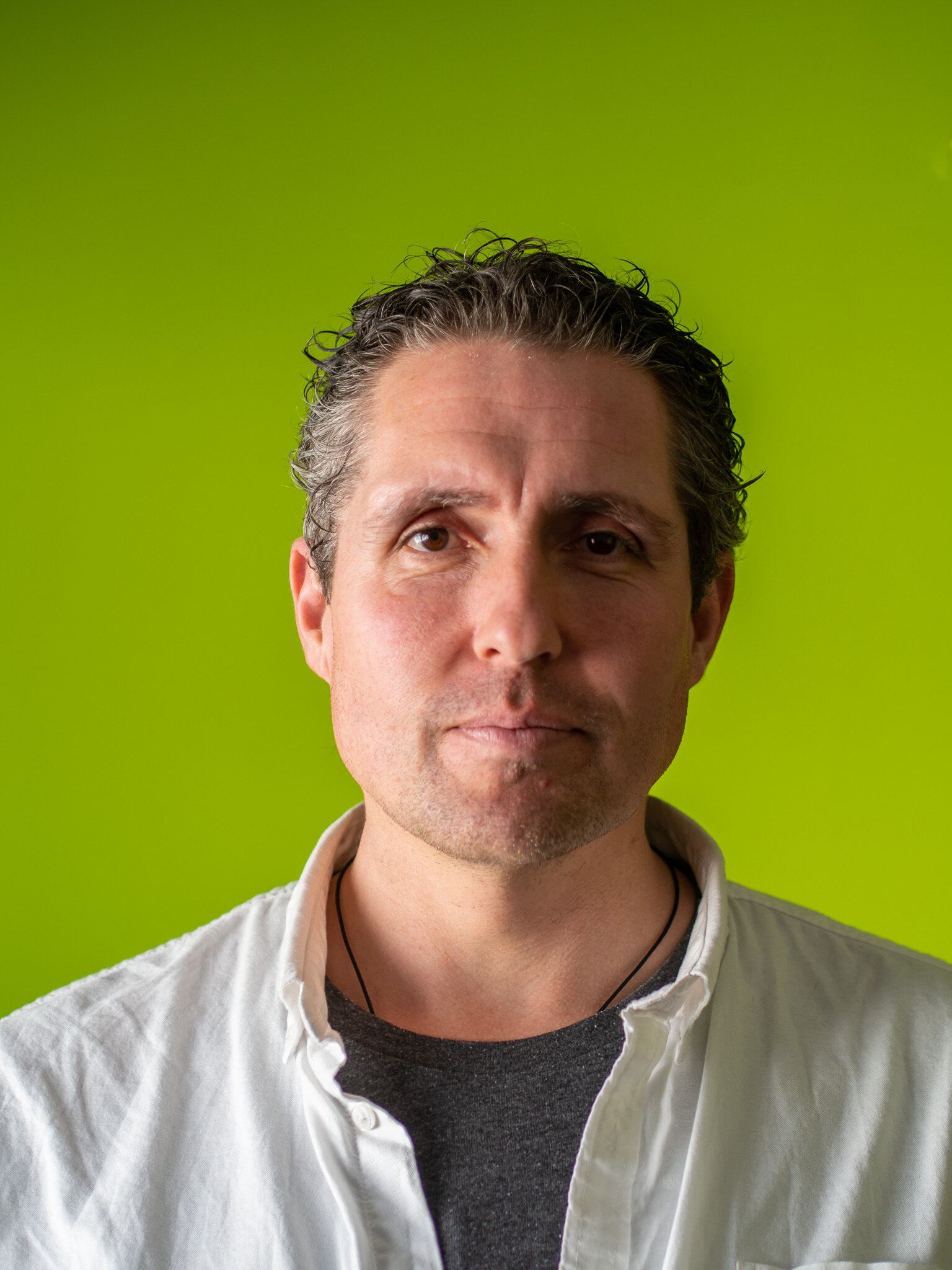
Kristian Evans is writer and poet from Bridgend in south Wales, interested primarily in ecological philosophy, animism, and intelligence in nature. He has published articles in a wide variety of magazines and literary journals, in the UK and beyond, and has also written texts for performance as well as a collection of poetry.
Kristian believes that impact on future generations should be at the heart of all our decision making, and that we should strive to pass on to our descendants a better world than that we inherited.
For many years an Adviser to Sustainable Wales and he has acted as Assistant to the Directors of both Sustainable Wales and SUSSED. He has been an enthusiastic amateur naturalist since childhood and is also a gardener and a student of renaissance astrology. He has three children: two boys and a border collie.
He is the author of A Kenfig Journal.
Robert Minhinnick is a co-founder of Sustainable Wales and In 1994 Robert co-founded Friends of the Earth Cymru and was Information Officer and board member there until his departure in 1994. He is a three times winner of the Wales Book of the Year award, TS Eliot prize shortlisted writer, poet and novelist. twitter
Laura Wainwright is from Newport, Wales. Her first poetry pamphlet will be published by Green Bottle Press in 2021. She is also author of New Territories in Modernism: Anglophone Welsh Writing, 1930-49 (University of Wales Press). The Newport Journal is written by Laura and published on this site.
100 Poems to Save the Earth, published by Seren Books
Zoë Brigley, Kristian Evans
https://www.serenbooks.com/productdisplay/100-poems-save-earth

Our climate is on the brink of catastrophic change. 100 Poems to Save the Earth invites us to fine-tune our senses, to listen to the world around us, pay attention to what we have been missing. The defining crisis of our time is revealed to be fundamentally a crisis of perception. For too long, the earth has been exploited. With its incisive Foreword, this landmark anthology is a call to action to fight the threat facing the only planet we have.
Writing from rural and urban perspectives, linking issues of social injustice with the need to protect the environment, this selection of renowned contemporary poets from Britain, Ireland, America and beyond attend carefully to the new evidence, redraw the maps and, full of trust, keep going, proving that in fact, poetry is exactly what we need to save the earth.
“This compelling suite of poems is a timely reminder to cherish, to celebrate. What could be more enjoyable than beautiful poems about this beautiful planet? This collection is immediate, moving, wise and unforgettable as it is unputdownable!” – Daljit Nagra, poet and presenter of BBC Radio 4’s Poetry Extra