
Latest news and articles from Sustainable Wales summer 2026
Read More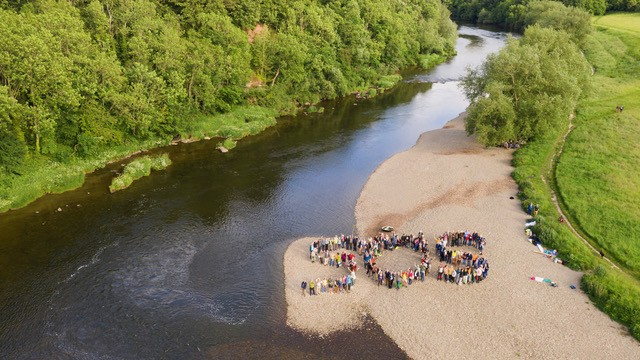
Citizen power - Wye not?!
The recovery of our precious rivers depends on more than our failing governments and regulators, it depends on the determination of local people willing to act.
Friends of the River Wye have demonstrated the power of grassroots organising by turning concern for a declining river into a coordinated movement of volunteers, citizen scientists, artists, campaigners and community groups working together to protect one of the UK's most important and beloved rivers.
When the Wye turned green with an enormous algal bloom in 2020, Friends of the River Wye formed to investigate what was going on. They discovered a huge lack of meaningful data from the Environment Agency and Natural Resources Wales after years of austerity and cuts to budgets.
A decision was made to do something! Volunteers across the Wye catchment were trained to regularly test water quality. Armed with simple monitoring kits and shared methods, local residents began collecting and uploading data.
The results show what people power can achieve. Across the Wye catchment, citizen scientists have now gathered over 50,000 water quality samples from hundreds of monitoring sites, creating one of the most extensive community-led environmental datasets in the country. This work not only improves our understanding of the river's condition but also empowers communities to become guardians of their local streams and waterways.
This growing movement has recently culminated in a landmark achievement: the signing of the River Wye Charter. Developed collaboratively by communities, environmental organisations, councils and river advocates across the catchment, the Charter recognises the Wye as a living ecosystem with intrinsic rights, including the right to flow, regenerate, sustain biodiversity and exist free from pollution. Endorsed by local authorities and landscape organisations on both sides of the border, it represents a powerful example of change driven from the ground up. The Charter not only reflects years of evidence-gathering, campaigning and public engagement, but also establishes a new framework for ensuring the river's interests are represented in decisions about its future.
Grassroots organising like this succeeds because it connects local knowledge with collective action. By bringing together volunteers, universities, wildlife trusts and environmental groups, Friends of the River Wye have shown that ordinary citizens can generate credible scientific evidence, influence public debate and play a vital role in restoring the health of the natural world.
Why Tony Blair is wrong about net zero
While Tony Blair has a complex legacy it is true to say that his governments did positive things in the name of fighting the climate crisis. After all, it was under the third Blair government in 2006 that the Climate Change Bill was introduced. As part of this Bill, his government proposed the five-year reporting targets that would later be made law when the Bill became and Act.
These targets have saved us from some of the worst excesses of the anti-net zero cadre in politics and have ensured some level of continuity around decarbonisation policy, enabling advocates and policymakers a level of basic security that has been lacking in other critical areas.
So — having said all this, how did Blair get it so wrong in his latest essay?
He says:
We must prioritise cheaper energy and electrification over net zero and use what is left of our North Sea oil and gas resources. This is essential for our competitiveness and for taking advantage of AI.
To suggest this is an ‘either/or’ misses the point. Net zero does not mean eliminating the use of oil and gas altogether; it means getting the world to a point where it emits less CO2 into the atmosphere than it takes out.
You only have to look at China, India, Pakistan, and even the United States of America (Texas is a good example) to see how renewable energy: 1) can be rolled out at scale to provide cheaper energy; and 2) is key to electrification.
All of these countries are beginning to see the benefits of lower bills thanks to renewable energy generation — whether in solar, wind, battery storage, and other vectors. Here in Britain, renewables are demonstrating the potential for lower energy costs. As we build more of it, the rewards will come down the pipeline.
That Tony Blair frames a retreat from net zero as being necessary to take advantage of AI is telling. His think tank – the Tony Blair Institute (TBI) – where his comments were originally posted, is a significant outlier in a UK context because it has levels of funding akin to a US Super PAC and exerts significant influence on the UK Government. The TBI has received or been pledged a total of $348m from Oracle, a prominent AI company whose founder has also sought to buy up huge swathes of the US media landscape and is a Trump supporter. The TBI and Oracle are so closely entwined that their staff go on joint country retreats and join one another’s calls with policymakers. Tony Blair is not an independent voice when it comes to AI and net zero policy. If, however, you do believe that AI can create a better world, the amount of power needed for it to function means we are going to require all the energy sources we can find. There is no way it can be supported by oil and gas alone without massive further damage to the climate.
Blair then goes on to ask: ‘Does our economy need right now the goal of clean energy or cheap energy?’
Again, he creates a dichotomy that needn’t exist. Clean energy or cheap energy. As if we can’t have both.
The renewable energy pipeline for Wales up to 2035 is estimated to be almost 18GW. (To put this in context, energy regulator Ofgem says the average household uses 2,700kWh per year. Meeting this target would also mean 8,000 FTE jobs created, and 13.4m tonnes of CO2e saved. Through its Contracts for Difference (CfD) scheme, the UK Government has also committed to supporting wind, solar, and tidal developers capital expenditure costs. Once these renewable projects are built, we will have both clean and cheap energy.
Oil and gas will then represent a diminished amount of our energy — meaning a win for protecting the climate, for household bills, and for energy independence.
Finally, Blair talks about an agenda that is ‘radical but sensible’. Again, he misunderstands. The radical-but-sensible option — the only option — is to pursue cheap energy through clean energy.
It is perhaps a casualty of his worldview that he thinks it must be an either/or; his politics are founded on the principle that there are simply those who get it, and those who don’t. There is no sense that the guiding mission should not only be achievable — it also must carry with an understanding. of the future people want to live in.
People want lower bills; they also do not want to live on a planet that is constantly plagued by extreme weather, crop failure, pollution, and instability brought about through scarcity.
There is no greater mission than solving the climate crisis. It’s immediate, and it cuts across pretty much every other area of life (housing, environment, education, trade, foreign affairs).
So it seems strange that Blair thinks that any overriding mission should be absent of net zero. Because at some point, without net zero, the other things will begin to break down. You can’t have economic growth if flooding and bad weather means people can’t work, go outside, and live their lives. You can’t have good health if people are struggling with heat exhaustion. You can’t have strong trade if crops fail.
This is why net zero has to be a part of any conversation about our future.
Someone with Tony Blair’s level of experience, and his claims to such foresight, should know better than to prioritise short-term gain at the expense of a serious long-term plan that we all desperately need.
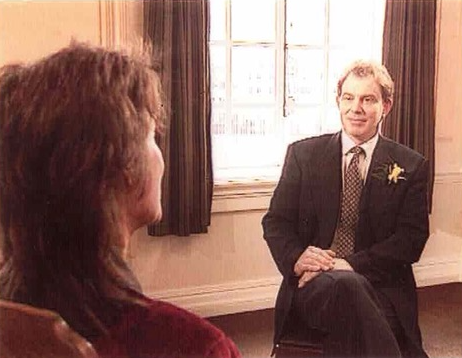
Unfortunately, Blair has a long history of misunderstanding the significance of nature and climate – especially when things go wrong. Back in 1996, our founder and director Margaret interviewed Blair for HTV ‘Grassroots’ in his role as opposition leader following the devastating Sea Empress oil spill off the coast of Pembrokeshire. It became obvious to Margaret that Blair knew little about energy in Wales. For her, this attitude is reminiscent of his recent scorning of Labour’s Net Zero policy.
Sustainable Wales

New publication - Duncan Bush - Robert Minhinnick, (Writers of Wales)
Laura Wainwright writes:
If Duncan Bush is ‘his own archaeologist’, as Robert Minhinnick suggests in his fascinating and illuminating study, Minhinnick digs deeper and more determinedly than any have before to reveal the life and work of this complex, contrary and unjustly neglected Cardiff writer. Drawing on a wide range of previously unseen and unpublished material from the Bush family’s archive, Minhinnick’s expansive study is testament to Bush’s striking ambition, versatility and invention, encompassing poetry, translation, fiction, drama, film and television; as well as his own playfully subversive, hybridised literary forms. In the spirit of classic Writers of Wales volumes – such as Leslie Norris on Glyn Jones – the book is rich with the insights of a distinguished Welsh poet and writer, who corresponded with Bush as a friend and editor of Poetry Wales, and knew first-hand the socio-political and cultural contexts of his work. It is a precious contribution to our understanding of the history of Welsh writing in English, during Duncan Bush’s lifetime and beyond.
University of Wales Press, 2026. https://www.uwp.co.uk/book/duncan-bush-minhinnick/
Green Room Podcasts for March and May 2026 available
Recordings of the Green Room events for March and May 2026 are now available.
Read MoreHustings Porthcawl Senedd Election 2026
April 16 saw Sustainable Wales/Cymru Gynaliadwy hold a Senedd election hustings, chaired by Margaret Minhinnick (Sustainable Wales) – nominally for the Penybont/Bro Morganwg constituency.
Representatives of Labour, Conservative, Plaid Cymru plus two Independents answered questions from the public. An audience of seventy listened to questions on climate change, Porthcawl regeneration, growth of Cymraeg, and other issues. Thanks to all the candidates and the engaged audience that attended.
Our co-founder Rob reflected that of the hustings he had attended, he enjoyed this most, because the candidates allowed themselves to speak personally, especially about their own mental health.
As we all know, Plaid Cymru was successful in the constituency, and throughout Wales.
Of the two Plaid members elected for this seat, Mark Hooper, who attended the Porthcawl hustings, has been appointed Minister for Transport.
We have written to Mark with congratulations from the charity, and to request a meeting.
A recording has been released of the Sustainable Wales hustings and can listened to or downloaded here.

More recordings from other events can be found on our Podcast page.
Climate Worries and Facing the Future
In November 2025, when Monmouthshire was overwhelmed with floods, the water flowed past at 18 times its regular level. When interviewed, residents were shocked at how rare it felt. However, experience, stories and even the eye-test from the last few months can bring that sinking feeling of knowing that it is part of a trend that is becoming much more common thanks to climate change.
It is easy to worry. Some parts of South Wales experienced rainfall topping 150% of what would be expected for January at the beginning of the year. Some areas were washed every day of February. Last summer was the hottest on record for the UK and the hottest for Wales since 1884. The Welsh climate is under pressure and our old norms are changing before our eyes.
Marches by schoolchildren, the activities of Extinction Rebellion and a sense of urgency around COP summits feel like something from a previous world. There is a sense that climate change is underreported, with net zero as a concept, in particular, increasingly considered a term non grata in political discourse (see our recent blog on this topic). It is understandable, then, that climate anxiety has become more and more of an issue.
Anxiety about climate change is a difficult worry to resolve, as it is one rooted in scientific fact, regardless of how much that fact is listened to by governments and politicians. For example, one in seven homes in Wales are at risk of flooding. Natural Resources Wales estimates this will increase by 28% over the next century.
There are two key things that we can tie some hope to: campaigning for change and managing the present. There needs to be hope. There are, indeed, things to be hopeful for. The Senedd election in May is a real opportunity for climate change to be taken seriously. Left-leaning parties such as the Greens and Plaid Cymru have already drawn attention, to differing extents, to the value of preserving Wales’s wonderful landscape and pushing for much more to be done.
In May, there will be 96 Members of the Senedd. There will be many new faces from across the country, probably from across the political spectrum. Rising from 60 to 96 MSs, enables more discussion, greater scrutiny on committees, more questions asked to Ministers and more space for the reflection on this issue it deserves.
Plenty will change in the Senedd from May 8th, but, as we all know, legislation and delivery can take a long time to come. Managing worries about the climate is vital for the here and now to ensure that we can keep the energy to continue to fight for change. There are likely different emotions involved for many people. This could be anger at a lack of change; frustration; anxiety about the future of the planet or your local area; grief at environmental loss; or guilt about our collective impact on the planet. You might also find it worsens worries you already have. It is a complicated issue that requires complex answers beyond just what legislation or a question on the floor of the Senedd can achieve.
A few things that could help you manage worries about the climate could be:
Managing how you engage with social media. We know that social media can make even the smallest conversation overwhelming. Managing what you see and avoiding the vortex of worry it can bring about can break the cycle of doomscrolling.
Giving time and energy to community projects, from tree planting, to volunteering for environmental charities and more. There’s so much you can do in Wales if you take the time to look for it (you could even think about supporting Sustainable Wales!).
Talk. You aren’t alone in experiencing this worry. It’s shared by people the world over. Having positive conversations focusing on campaigning for change. Finding ways to demand a better world can really boost you.
This is not to say that focusing on personal wellbeing demands a retreat from facing the issues head-on. In the pandemic, it was well-observed that isolation and individualism grew as the breakdown of the collective grew more endemic, thanks in part to mismanagement from those with the power to alleviate challenges and save lives. You need the energy to keep going. We all do. So much of the news feels out of our control. It feels overpowering and exhausting. Finding strength beneath that to keep going is so important, now more than ever.
George Watkins
John Barnie: A Poet in Plain Sight – a review of In the Shadow of the Yew
Anyone who delves into the depths of the Sustainable Wales website might note the name ‘John Barnie’ crops up a good deal.
In Spring, 2026, Barnie has published his latest collection of poetry, ‘In the Shadow of the Yew’, from his loyal publisher, Cinnamon: thirty three pieces only identified by Roman numerals. (But what a heavy-handed title).
As ever his influences are poets we might consider remote from our lives: Robinson Jeffers, Harry Martinson, RS Thomas, AR Ammons. Also now Conrad’s character in ‘Victory’, Axel Heyst:
All action is bound to be harmful devilish. That is why the world is evil upon the whole. As if existence itself is somehow ironic. Maybe it is.
To balance these seemingly austere male figures, I propose Barnie starts reading Annie Dillard, also recently noted on this website.
‘In the Shadow of the Yew’ teems with names of creatures made extinct by human interference. But this time the poetry is harder to locate, existing in images and lines buried, sometimes crushed, by Barnie’s familiar pessimisms. “I myself have done less good than harm” is the last line of XXV111. As if the writer feels honour bound to apologise for being alive.
As ever, this writer is already engaged on his next collection. That is what John Barnie does, making up for seemingly lost time with relentless creative energy. Now in his late eighties, his writing life began as an academic, before editorship of ‘Planet: the Welsh Internationalist’ allowed a different and more radical and interesting course.
Because he enjoys cooking, my favourite memory of Barnie the man is preparing for me (June, 2025) an Indian-inspired meal. And afterwards standing with me outside his house in Comins Coch, waiting for a bus. How thoughtful of Ceredigion council to erect a bus shelter outside the home of this inveterate non-driver. Our ‘one billion, forty-seven million’ vehicles, by the way, get their comeuppance in XXV.
With Annie Dillard he shares a horror of social media and the internet yet maintains his own website.
And anyone who delves into Sustainable Wales should note from my interview with this inevitably stubborn poet, his quotation from TS Eliot: ‘“Old men ought to be explorers.” There’s too much to see, hear, read, and experience to start putting on slippers and watching daytime TV’.
On the inside cover of this volume is a listing of the poet’s thirty volumes. I urge anyone interested in modern poetry to delve into this quiver. So many wonderful arrows, and, thankfully, almost all with titles. But this from XXV1:
a mountain bluebird in Saskatchewan
blue as the bluest lapis lazuli
in the washed-out after-winter land.
Lots of birds in this collection, and the reader can be sure twitcher Barnie has spotted every one. Except the extinct ones. What’s also distinctive are the frequent summonings of Abergavenny life and the town’s people. Viewed this way, the collection is one poem of thirty-three cantos composed of shattered and unfinishable narrratives. Incohesively arresting. I have to smile at this from XXX1:
why are skulls always grinning
as if they’d enjoyed it hugely
and now could stare at the Sun
And to his faithful publisher I suggest a ‘best of’ selection to sort through hundreds of poems. That’s a publication now overdue. ‘The RS Thomas Poetry Appreciation Group’ already exists on social media. The RS quandary was the absence of ‘God’, while Barnie’s is the preponderance of ‘Time’. Similarly an as yet untitled “tight band” of admirers for this Aberystwyth writer will surely one day modestly flourish. I will be amongst them. Yes, long may you run, John Barnie.
Robert Minhinnick
22.3.26
Case Study: Museum Wales Policy Workshop with Sustainable Wales
I was first introduced to Sustainable Wales shortly after I started working for Amgueddfa Cymru – Museum Wales. As the Sustainability Lead for the organisation, I was asked whether I’d like to join a cross-departmental working group that was focusing on growing the brand licensing and product development aspects of our retail offering. As a conscientious organisation, the working group considered it essential to develop a policy that sets out our ethical and sustainability aspirations. One of my colleagues was already aware of the work that Sustainable Wales does and reached out to enquire whether they could support our desire to create a robust ethical and sustainability policy. Thankfully, Sustainable Wales replied affirmatively, and we booked a half day workshop at Sustainable Wales’ premises in Porthcawl.
From initial contact, the Sustainable Wales team were friendly, knowledgeable and helpful – they welcomed us to the upstairs space like we were old friends! It soon became apparent that the Sustainable Wales team has deep knowledge built over many years and that they embody the ethical and sustainable ways of living that they promote. The workshop itself was a hybrid affair, with retail colleagues joining from their respective museum sites. No prior knowledge was assumed. Sustainable Wales gave a short presentation referencing multiple relevant resources, after which an open conversation was invited. The Sustainable Wales team guided us through issues we might like to take a stance on and how best to include this in a written policy document. At the end of the workshop, all attendees felt it had been a worthwhile exercise. I would recommend the Policy Workshop to any group or organisation who is in the development stage of a policy document or who feels their members would benefit from an awareness session.
On a personal level, I was impressed with the positive practical work that Sustainable Wales does and was keen to strengthen the links that had been forged during the workshop. I was therefore pleased to join the Sustainable Wales team as an Advisor in 2025.
Victoria Hillman, writing in a personal capacity
Project Lead: Sustainable Development and Decarbonisation at Amgueddfa Cymru