‘Eco-populism’, public support for climate action, and why we need to talk about fairness

“We must act now—right now—to tackle climate change. It’s one minute to midnight on that doomsday clock.”  

That isn't a quote from Ed Miliband, the embattled Energy Security and Net Zero Minister, nor Zack Polanski, the freshly elected, self-described eco-populist of the Green Party. That’s actually a quote from Boris Johnson while he was Prime Minister. The fact that comment feels so jarring demonstrates just how far the mainstream has moved from the cosy consensus on climate action and net zero (a legal target introduced by the Conservatives in 2019).  

In late 2025 we have both Reform (who were 92% funded by fossil fuel interests between 2019 and the 2024 election) and the Conservatives being explicitly anti-net zero, anti-climate action and even anti-climate science. Senior figures in the Labour Party appear to be looking for an excuse to distance themselves further from a set of policies which were once the centrepiece of their pitch to voters – despite the positive vision set out in their recently-published Warm Homes Plan.  

In truth, there has been growing disquiet over net zero and climate policies for some time and, as the transition encroached further into peoples' lives and began to influence how they heated their homes, moved around and what they ate, a compelling positive case for action was going to have to be made.  

It can feel like the battle has already been lost, that we (and perhaps our closest friends and relatives) still care about climate but no one else really does. New, detailed polling from the excellent Climate Outreach Britain Talks Climate and Nature report, demonstrates this isn’t the case. They found that 74% of respondents felt climate change was an important issue. However, their research also found that the public feel deeply disillusioned.  


They state:  

“People feel overlooked, disillusioned about the present and fearful for the future, and many are yet to be convinced that net zero offers a positive way forward.” 


This gap, between how individuals feel people other than themselves think about nature and climate change, and the reality set out in Climate Outreach’s report, where we can see nature and climate remain major concerns for a significant majority, has a name – pluralistic ignorance – where we significantly underestimate others’ levels of concern about an issue. This, coupled with widely felt disillusionment and distrust of institutions and decision-makers is a harmful phenomenon as it leaves us feeling isolated, prevents us having the conversations we need to be having, hinders positive action and leaves the door open to anti-climate rhetoric that is falsely assumed to be the majority view.  

The Climate Outreach findings begin to point to solutions to this issue. They’re an organisation concerned with climate communications, and they suggest it is critical that public figures 'translate and explain, don’t assume or assert’. This means cutting down on technical jargon, but most importantly, communicating in clear and inviting ways which describe enthusiastically why a policy matters and what it means for people’s lives. They recommend focusing on wider benefits of climate action and to remember that most people still believe achieving net zero will be good for the country (while not taking this support for granted).  
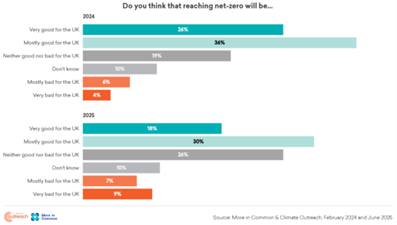
 

This analysis feels broadly correct and anyone interested in these topics should definitely look at Climate Outreach’s work for deeper insights. Pairing environmental and economic/social concerns has to be the way forward.  

When the British public are polled on what the most important issues facing the country are, they consistently rank some combination of Health, Immigration, The Economy, and Crime in their top 5 with the 5th spot taken by one of Tax, The Environment, Housing, Welfare or Defence. I would argue that nature and climate have a relationship to each of these, either because the impacts of climate change and collapsing ecosystems exacerbate these issues, or because well-designed policy to address them (i.e. building or retrofitting homes, encouraging the adoption of low cost public transport, supporting local, low carbon economies, etc) will have a material impact on mitigating or adapting to climate change and nature loss. There’s evidence of this fusion of climate action with progressive economic thinking taking place, with prominent left of centre think tanks and commentators now consistently making this case. We’ve also seen Friends of the Earth appoint Asad Rehman, whose previous role was head of War on Want, as their new CEO. Switched-on politicians and public figures would do well to apply this kind of eco-populist framing to their campaigns and policymaking.  

New Report: Sustainable Wales’ housing decarbonisation priorities.

2026 Senedd Manifesto Recommendations

Sustainable Wales’ housing decarbonisation priorities.

Sustainable Wales is Wales’ first and longest-running grassroots sustainable development organisation. We work with individuals, communities, voluntary groups, schools, educators, local authorities, public sector bodies, businesses, civil servants and politicians to offerconstructive and practical solutions and encourage a passion for sustainable living.

Wales has some of the oldest and least efficient housing stock in Europe, while our energy bills are among the highest in Europe. For many households every day sees them making an impossible choice between heating or eating.

Housing is integral to peoples’ perception of place and decarbonising homes in Wales will bring significant benefits across a series of social and economic spheres and should be a priority for all parties ahead of the 2026 Senedd election.

As an organisation, we have significant housing policy-related experience developed over multiple projects over the past 20 years. We are also fortunate to have Advisors and Trustees with considerable experience in Welsh housing and housing decarbonisation.

We have set out our position in this report.

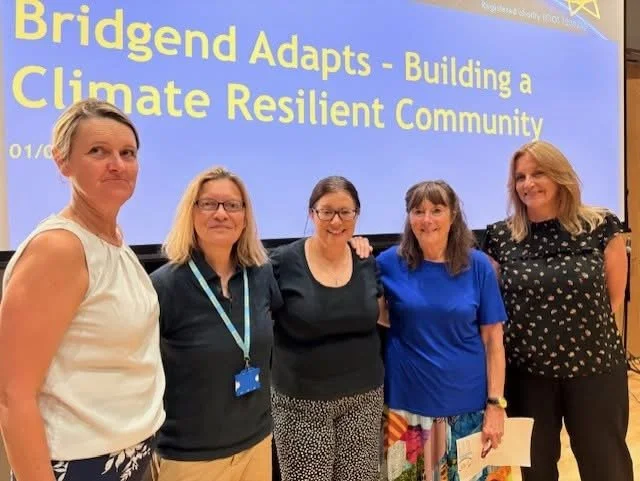
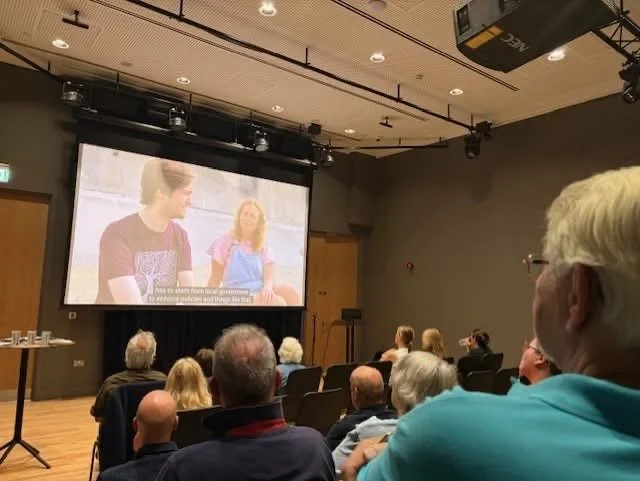
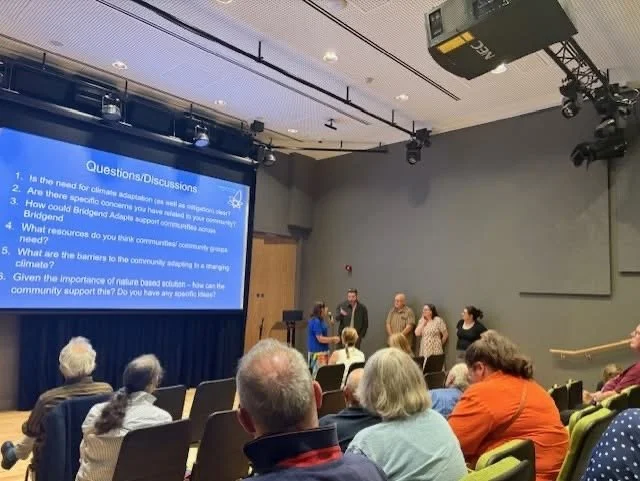
(updated) Bridgend Adapts - Building a climate resilient community together. Maesteg Meeting

Update post event:

-       Kathryn’s Bridgend Adapts presentation drew attention to the Public Service Boards’s Climate Change Risk Assessment  Report pinch-points, outlining the need for communities to prepare now for localised responses and she recommended the development of a community-based network.

-       The LA presentation provided a quite detailed overview of the CC Risk Assessment report, that there are potential risky areas, reinforcing the need to adapt. Common concerns emerged - that there is not enough funding within local authorities to take action.

-       A strong agreement that the community sector can play a key role in climate adaptation but support is needed. A feeling that our idea of a Climate Adaption support network would be a way forward and enable a closer link with the LA and the Public Service Board.

Thanks to EGIN for their support for this event.

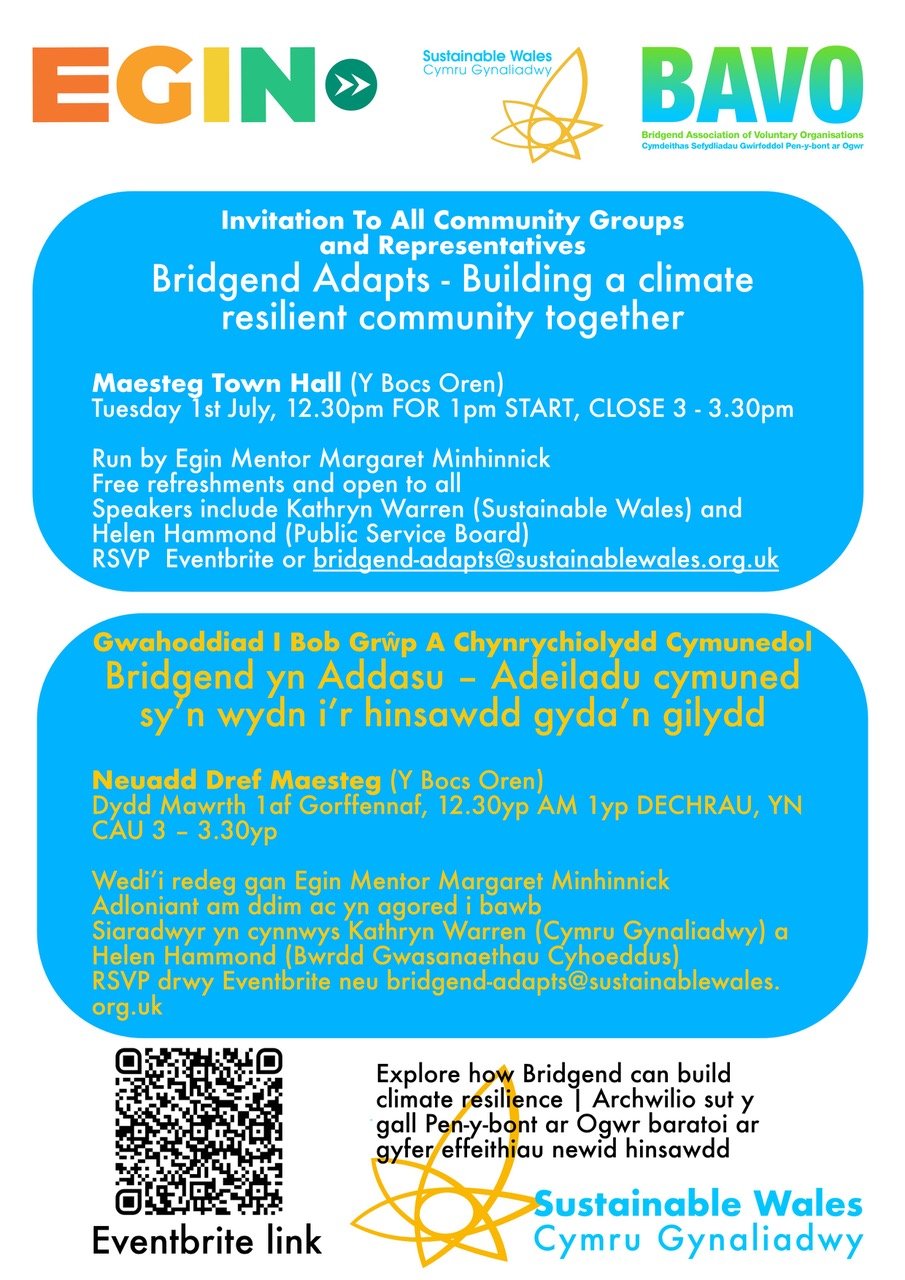
Advert for the event

INVITATION TO ALL COMMUNITY GROUPS AND REPRESENTATIVES

Maesteg Town Hall ( Y BOCS OREN )

Tuesday 1st July, 12,30 PM FOR 1PM START CLOSE 3 - 3.30PM

Run by Egin Mentor Margaret Minhinnick

Free refreshments and open to all

Speakers include Kathryn Warren (Sustainable Wales) and Helen Hammond (Public Service Board)

RSVP Eventbrite or bridgend-adapts@sustainablewales.org.uk

GWAHODDIAD I BOB GRŴP A CHYNRYCHIOLYDD CYMUNEDOL
Bridgend yn Addasu – Adeiladu cymuned sy’n wydn i’r hinsawdd gyda’n gilydd

Neuadd Dref Maesteg (Y BOCS OREN)

Dydd Mawrth 1af Gorffennaf, 12.30yp AM 1yp DECHRAU, YN CAU 3 – 3.30yp

Wedi’i redeg gan Egin Mentor Margaret Minhinnick

Adloniant am ddim ac yn agored i bawb

Siaradwyr yn cynnwys Kathryn Warren (Cymru Gynaliadwy) a Helen Hammond (Bwrdd Gwasanaethau Cyhoeddus)

RSVP drwy Eventbrite neu bridgend-adapts@sustainablewales.org.uk

Eventbrite link:

https://www.eventbrite.co.uk/e/bridgend-adapts-pen-y-bont-ar-ogwr-yn-addasu-tickets-1392381974969?aff=oddtdtcreator

Or contact bridgend-adapts@sustainablewales.org.uk to book.

Read Letter from the Future by Chloe Woodhouse

Chloe Woodhouse

Chloe Jade Woodhouse is a graduate of English Literature and Creative Writing. She is 23 years old and excited to develop her career as a performer. She is currently using her creativity to help teach, write poetry, and volunteer with local communities. 

Chloe's letter is addressed to our current future from a point in her past. Her letter hopes to capture the breadth of dystopia which daily life has become. Trying to trace dystopias evolution, spot its history, sharing her honest reflections. The letter joins others in 'from the future' series which are reacting, feeling, and drawing attention to the forces behind our global crisis.

Read Letter from the Future

Previously published Letters

Cam Elizabeth & Mike Erskine join the team of advisors for Sustainable Wales

We welcome the knowledge and experience of Cam Elizabeth and Mike Erskine to the team of advisors to Sustainable Wales.

Cam Elizabeth

Cam Elizabeth is a film producer and content writer, with a background in social research and project evaluation. Cam specializes in network building and creating content that is co-produced with community members. Seven years ago, Cam co-founded Mud and Thunder, a creative partnership working for social and environmental justice. Recent Mud and Thunder highlights include producing a podcast about community supported agriculture for DTA Wales, creating a research film for Circular Economy Newport, and making a series of films for Sustainable Wales.

Cam is also a qualified gardener and runs a community garden project in Monmouthshire.

Mike Erskine,

MSc Sustainable Development


Mike is a co-founder of Mud and Thunder, digital media changemakers working for environmental and social justice. He believes in the power of storytelling to help create change and follows community centred approaches to media creation, giving voice to community members and involving people in the telling of their own stories.

Over the last twelve years Mike has created films and digital stories on a range of topics including climate change, community energy, land ownership, nature connection and health, and regenerative farming. He has worked with organisations across Wales and the UK from the likes of Welcome to Our Woods in the Rhondda Valley, to Marine Conservation Society in Sussex, and Bannau Brycheiniog National Park Authority.

Mike is also a keen fell runner and you’ll often find him outside exploring a mountain, river or even a local park.